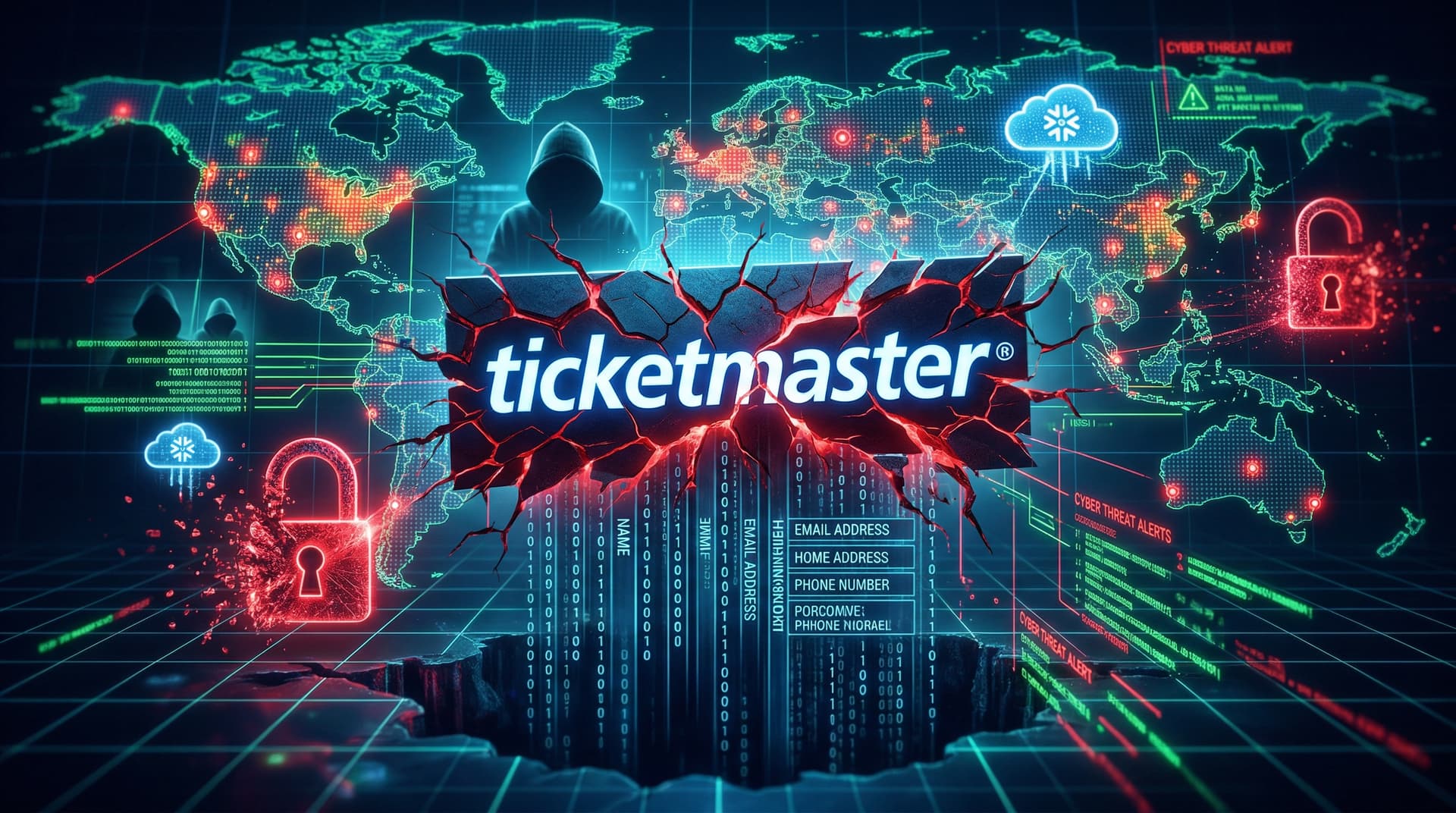
Live Nation Entertainment, the parent company of Ticketmaster, filed an 8-K report with the U.S. Securities and Exchange Commission (SEC) on August 30, 2024, revealing a significant cybersecurity incident. Between late May and early June 2024, cybercriminals accessed a Snowflake cloud storage instance used by Ticketmaster without proper credentials protection. The breach potentially impacted more than 560 million current and past customers worldwide, marking one of the largest data exposures in recent history.
The stolen data reportedly includes names, addresses, email addresses, phone numbers, and some partial payment card numbers. Crucially, no full credit card details or passwords were compromised, according to Live Nation. However, the sheer scale raises alarms about identity theft, phishing, and fraud risks for affected individuals.
The Snowflake Connection: A Systemic Vulnerability
This breach is not isolated. It stems from a widespread campaign targeting Snowflake customers whose accounts lacked multi-factor authentication (MFA). Snowflake, a leading cloud data platform, confirmed in May 2024 that attackers used previously stolen employee credentials—likely from infostealer malware—to access unprotected instances.
Cybersecurity firm Mandiant, which investigated, dubbed the threat actor UNC5537, also known as Scattered Spider or 0ktapus. This group has a history of social engineering and targeting high-value enterprises. Other victims include Santander Bank, Advance Auto Parts, and LendingTree, with data volumes in the hundreds of millions across cases.
Snowflake issued guidance emphasizing MFA, but many organizations had not implemented it. As of September 3, 2024, investigations continue, with Live Nation stating no evidence of data misuse yet, but the stolen information has surfaced on cybercrime forums.
Timeline of the Incident
- May 28 - June 11, 2024: Unauthorized access to Ticketmaster's Snowflake environment.
- Late May 2024: Snowflake detects anomalies across multiple customers and alerts them.
- August 30, 2024: Live Nation's SEC disclosure amid regulatory requirements.
- Early September 2024: Ongoing forensic analysis by incident response teams.
Live Nation engaged top cybersecurity firms and notified law enforcement. Ticketmaster customers began receiving breach notifications, urging password changes and credit monitoring.
Broader Implications for Cloud Security
This event underscores critical gaps in third-party risk management. Cloud providers like Snowflake offer powerful tools, but security hinges on customer configurations. MFA, while simple, remains under-adopted—only 40% of enterprise accounts enable it fully, per industry reports.
Experts warn of a 'supply chain' attack vector. "When one vendor is breached, it cascades," said Kevin Mandia, CEO of Mandiant, in recent statements. The Ticketmaster hack follows similar patterns in the Change Healthcare ransomware (February 2024) and MOVEit exploits earlier this year, eroding trust in digital ticketing and financial services.
Regulatory scrutiny intensifies. The U.S. FTC and EU GDPR enforcers may probe compliance. Live Nation's stock dipped 2% post-disclosure, reflecting investor concerns over litigation and remediation costs, potentially exceeding tens of millions.
What Users Should Do Now
Affected Ticketmaster users face elevated risks. Recommended steps:
1. Monitor Accounts: Watch for phishing emails pretending to be from Ticketmaster. 2. Freeze Credit: Contact Equifax, Experian, and TransUnion to place fraud alerts. 3. Change Passwords: Update credentials on Ticketmaster and linked services. 4. Enable 2FA: Everywhere possible, especially email. 5. Scan Devices: Use antivirus to detect infostealers.
Live Nation offers free credit monitoring for one year to verified users via a dedicated portal launched September 2, 2024.
Industry Response and Future Outlook
Snowflake mandated MFA for all new trials in June 2024 and provides free security assessments. Partners like CrowdStrike and Palo Alto Networks reported a 30% uptick in Snowflake-related alerts post-incident.
The cybersecurity community calls for zero-trust architectures. "Assume breach," advises NIST in updated guidelines. Enterprises must audit vendors rigorously, with contractual MFA clauses.
As September 2024 unfolds, expect class-action lawsuits against Live Nation and Snowflake. This breach, while not involving ransomware payment, exemplifies data theft's profitability—stolen info sells for $1-10 per record on dark web markets.
Lessons for Businesses
- Prioritize MFA: It's the lowest-hanging fruit against credential stuffing.
- Vendor Due Diligence: Quarterly audits of cloud configs.
- Incident Response Plans: Test regularly; Live Nation's quick disclosure mitigated some PR damage.
- Employee Training: Combat social engineering, Scattered Spider's forte.
In the post-CrowdStrike era (July 2024 global outage), resilience is paramount. Ticketmaster's saga reminds us: In cybersecurity, convenience often trades against safety. With 560 million records loose, the real cost unfolds in fraud waves ahead.
AK News will update as new details emerge. Sources: SEC filings, Mandiant reports, Snowflake advisories.