- BTC reaches $75,903, up 1.9% per CoinGecko, ignoring quantum hype.
- Fear & Greed Index at 33 reflects caution, not fear.
- Experts forecast 10-20 years before viable quantum threats emerge.
Crypto experts dismiss quantum computing threats to Bitcoin as BTC hits $75,903 on October 10, 2024. CoinGecko reports 1.9% gains. Alternative.me's Fear & Greed Index stands at 33, signaling caution without panic. ETH climbs 1.7% to $2,318.32.
Radio New Zealand (RNZ) quotes quantum physicists who rate risks decades away. Current quantum computers lack qubits to crack SHA-256 hashing or ECDSA signatures. XRP rises 1.6% to $1.43; BNB advances 1.9% to $631.50.
Bitcoin uses asymmetric cryptography. Shor's algorithm threatens ECDSA private keys theoretically. Practical barriers remain: fault-tolerant quantum machines do not exist.
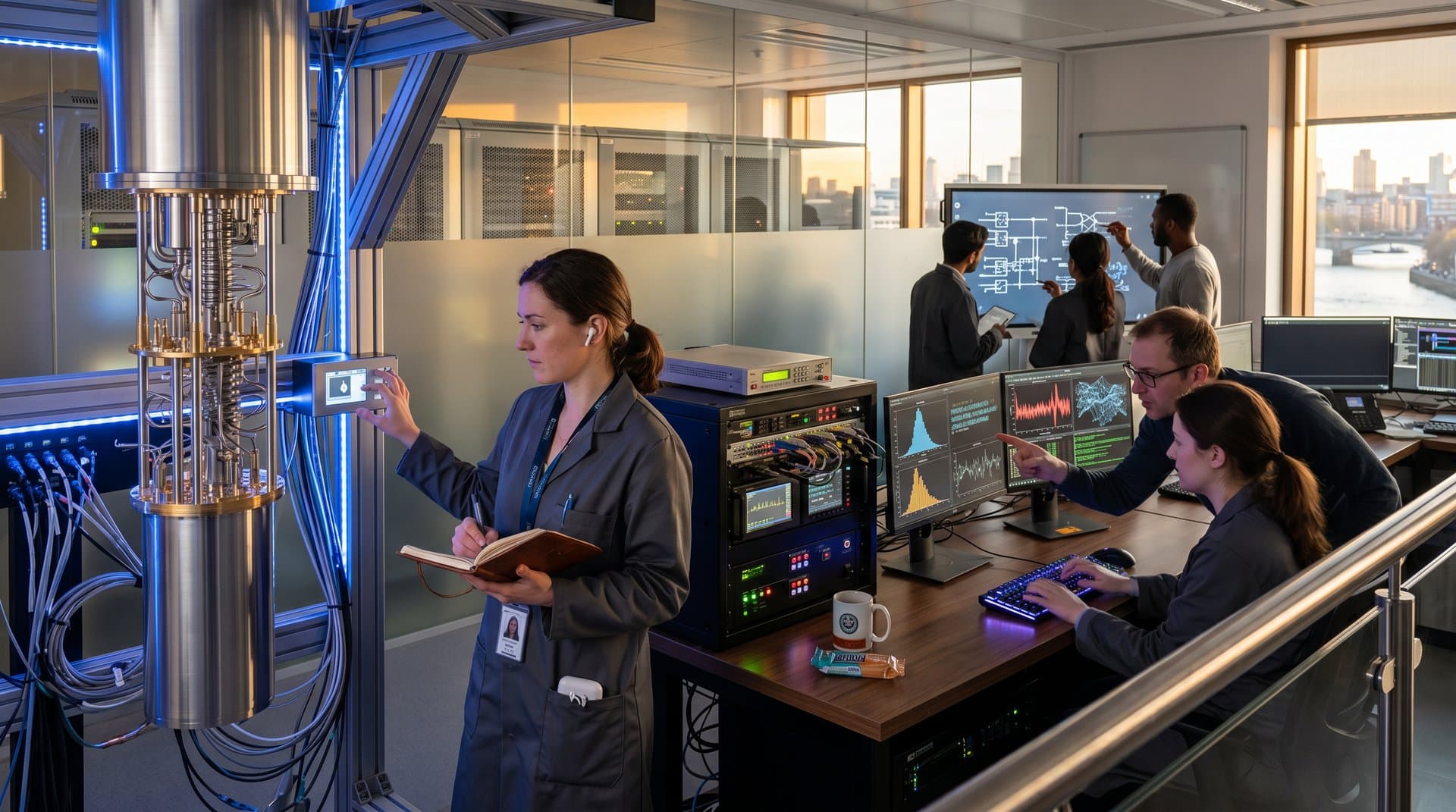
Quantum Computing Targets Bitcoin Security
Quantum superposition speeds factoring via Shor's algorithm. It endangers ECDSA keys in Bitcoin wallets. Grover's algorithm cuts brute-force time for SHA-256 but requires millions of logical qubits.
Bitcoin's proof-of-work leverages SHA-256 robustly. IBM's Condor processor has 1,121 physical qubits but 0.001% error rates per gate, per IBM. Cloudflare's Nick Sullivan projects 10-20 year migration timelines in his analysis.
Post-2024 halving, Bitcoin hashrate reaches 650 EH/s per Blockchain.com, blocking 51% attacks. The 21 million supply cap stays secure from quantum progress.
- Asset: BTC · Price (USD): $75,903 · 24h Change: +1.9% · Market Cap (USD): $1.49T
- Asset: ETH · Price (USD): $2,318.32 · 24h Change: +1.7% · Market Cap (USD): $279B
- Asset: USDT · Price (USD): $1.00 · 24h Change: 0.0% · Market Cap (USD): $119B
- Asset: XRP · Price (USD): $1.43 · 24h Change: +1.6% · Market Cap (USD): $81B
- Asset: BNB · Price (USD): $631.50 · 24h Change: +1.9% · Market Cap (USD): $92B
CoinGecko tracks resilience in top assets.
Why Crypto Experts Ignore Quantum Bitcoin Threat
Media hype ignores timelines. Google DeepMind's Hartmut Neven predicts fault-tolerant systems after 2030. IBM's Jay Gambetta agrees on 15-year horizons for crypto-breaking scale.
Bitcoin developers plan soft forks for quantum-resistant signatures like Dilithium. CoinDesk's Jeff John Roberts reports 10-20 year minimum threats in June 2023 coverage.
Ethereum's 2022 Merge to proof-of-stake cut energy use, easing quantum vulnerabilities. NIST picks CRYSTALS-Kyber and Dilithium as 2024 standards. BlackRock's IBIT ETF manages over $20B in BTC.
EU MiCA rules require quantum risk disclosures from 2026. Glassnode shows 14.5M BTC in long-term dormant supply, untouched by FUD.
Bitcoin Defenses Against Quantum Attacks
Bitcoin Core developers advance BIP-340 for Schnorr signatures, tougher for quantum than ECDSA. Taproot boosts privacy and reduces address reuse risks.
Lightning Network settles channels off-chain quickly, minimizing key exposure. DeFi uses quantum-safe oracles from Chainlink. IBM Quantum's blog by John Martinis explains hybrid classical-quantum transitions.
Ark Invest's Katie Stockton reports stable on-chain metrics. Glassnode data reveals long-term holders control 74% of supply, ignoring quantum concerns.
Post-Quantum Cryptography Upgrades Ahead
Bitcoin upgrades need 90% miner signaling. Ethereum progresses through EIPs like Prague for signature shifts.
Central banks test quantum-safe CBDCs. Federal Reserve's Project Hamilton validates lattice-based crypto. Reuters covers October 2023 University of Sussex study deeming quantum no immediate crypto threat.
Coinbase wallets integrate NIST standards. Binance plans PQC migrations. Quantum computing Bitcoin threat remains hypothetical. BTC at $75,903 focuses on AI integrations and ETF inflows.
Expert consensus holds that upgrades deploy before breaches materialize.
Frequently Asked Questions
Is quantum computing a real threat to Bitcoin security?
Shor's algorithm targets ECDSA per Cloudflare's Nick Sullivan. Millions of logical qubits required; current IBM systems insufficient. Post-quantum upgrades in planning.
What is Quantum Computing Bitcoin Threat timeline?
10-20 years minimum per CoinDesk and IBM's Jay Gambetta. SHA-256 resists Grover's effectively. BTC at $75,903 shows market stability.
How does Bitcoin defend against quantum attacks?
Schnorr signatures via BIP-340 and Taproot harden defenses. NIST's CRYSTALS-Kyber enables soft forks. Ethereum's proof-of-stake reduces parallel risks.
Why do crypto experts ignore quantum computing Bitcoin Threat?
High qubit error rates and scale barriers persist. Focus shifts to AI and ETFs. Fear & Greed at 33 per Alternative.me mirrors calm.