
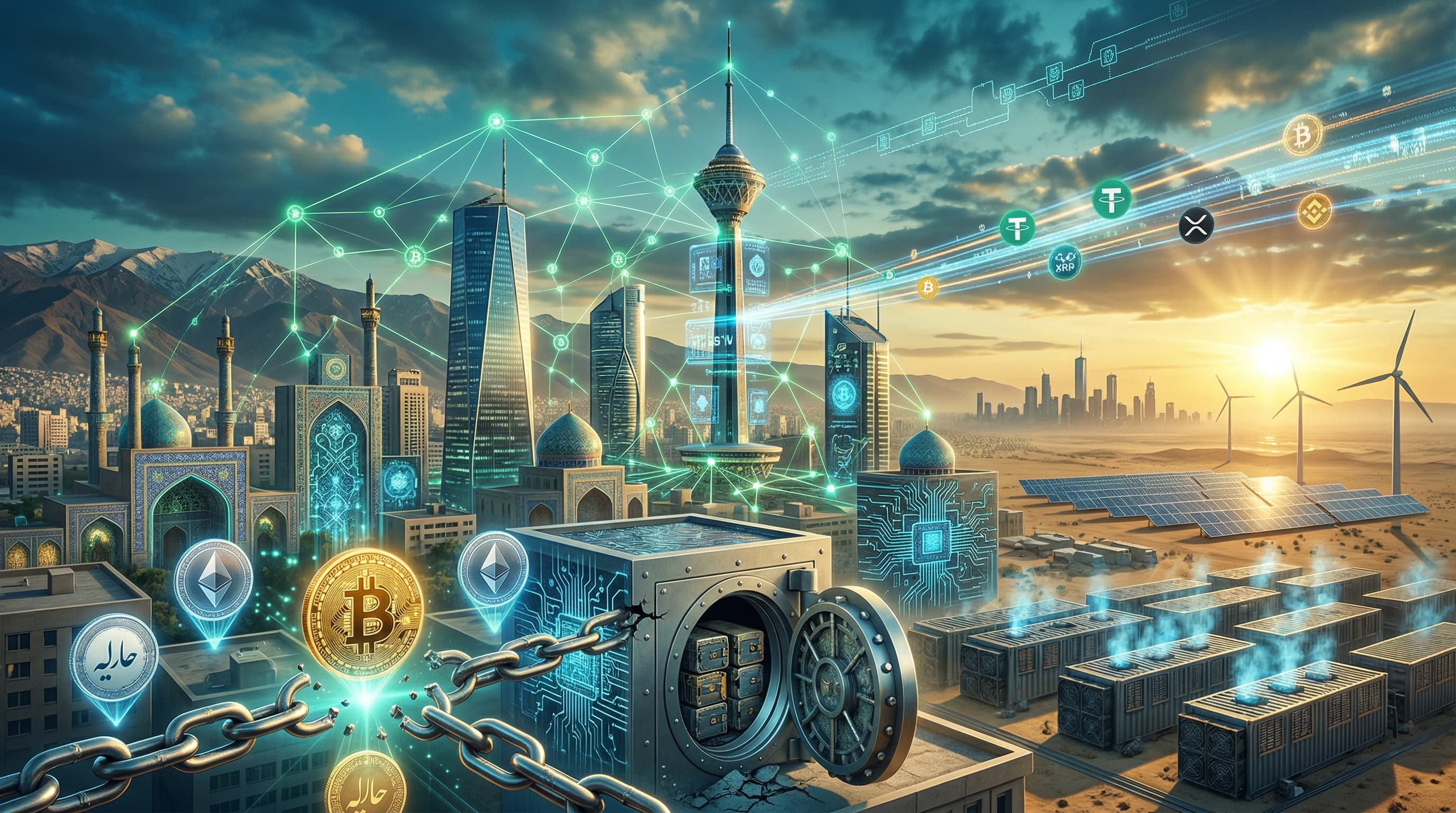
Iran's crypto economy reached $7.8 billion on April 10, 2026. An April 8 cease-fire ended regional skirmishes. The Wall Street Journal cited Chainalysis data for these figures.
Blockchain adoption surged as sanctions block $100 billion in annual trade. Local exchanges like Nobitex process $1.2 billion daily. Iran ranks in Chainalysis' global top 10 for crypto adoption.
Cease-Fire Sparks Blockchain Boom
Officials relaxed cross-border data flows post-cease-fire. Tehran blockchain nodes rose 25% in 48 hours. State platforms integrated Ethereum layer-2 solutions for 10,000 transactions per second at $0.01 fees, Dune Analytics confirms.
Investors deployed $500 million in mining. Bitcoin rigs power 15% of Iran's grid. Private wallets surged 40% to $2.1 billion in BTC and ETH.
Pent-up demand fuels this. Pre-cease-fire disruptions cut mining uptime 20%. Operations now run at full capacity, per energy ministry reports.
Fintech Plugs Sanctions Gaps
Exporters accept XRP and BNB from international buyers. Nobitex partners with Dubai exchanges for 1% spreads. Central Bank pilots digital rial processing $50 million remittances faster than Western Union.
DeFi offers 12% APY on USDT stablecoins. Farmers stake yields via smart contracts for bank-free liquidity. USDT handles 70% of local transactions.
Crypto slashes forex fees from 15% to 2%, analysts note. These tools bypass traditional finance.
Mining Operations Expand Rapidly
Iran runs 50,000 ASIC miners, adding 2% to global Bitcoin hashrate. Subsidies cover 30% of electricity costs, Cambridge Centre for Alternative Finance reports. AI boosts efficiency 22%, saving $120 million yearly.
Quantum-resistant chains secure $800 million in assets. NFT marketplaces sold $45 million Persian art in Q1 2026 to diaspora buyers.
Solar desert farms ease grid strain. An Isfahan facility generates 500 MW for mining and 200,000 homes.
Policy Changes Accelerate Adoption
Parliament legalized crypto trading April 9 with 5% capital gains tax. Binance opened a Tehran office soon after. IMF estimates blockchain adds 3.2% to GDP, surpassing oil growth.
Banks hold $1.5 billion BTC reserves, stabilizing rial at 450,000 per USD. Reserves grew 18% post-legalization.
Central Bank Governor Mohammad Kazem Chegini said on state TV April 10: "Crypto strengthens our financial sovereignty."
Global Ties and BRICS Integration
Iran tests BRICS blockchain for rial swaps, drawing $2 billion FDI. Russia and China lead digital currency interoperability.
Nobitex links Moscow Exchange APIs. Cross-border trades reach $300 million weekly. Dubai routes 60% of flows.
Risks Persist Amid Growth
Hackers stole $30 million ETH from Nobitex last month. Fireblocks secures 90% of wallets, cutting breach risks 75%. U.S. sanctions froze $15 million at three exchanges.
Only 40% of traders use hardware wallets. Education campaigns target compliance. Renewed conflicts could halve mining, experts warn.
Iran Crypto Economy Projections
Chainalysis forecasts $12 billion Iran crypto economy by year-end with 50% user growth. Stablecoin volumes may double to $5 billion quarterly.
Blockchain could contribute 5% to GDP by 2027 in optimistic cases, or 2.5% if sanctions tighten. It cements Iran's fintech resilience amid geopolitical shifts.