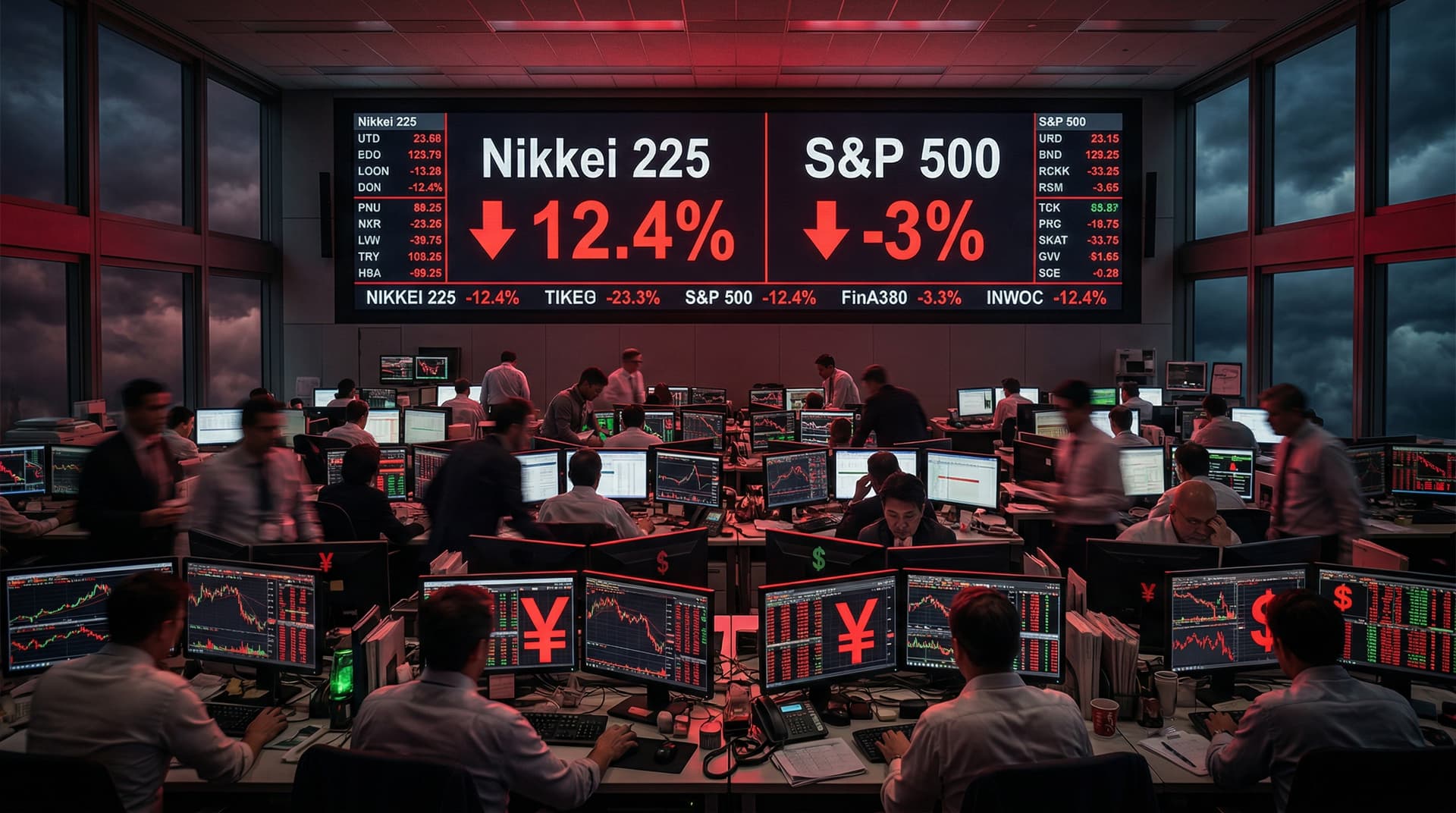
In a stunning display of market volatility, global stock exchanges witnessed one of their most harrowing days in decades on August 5, 2024. Japan's Nikkei 225 index plummeted 12.4%, marking its steepest single-day decline since the Black Monday crash of 1987. This bloodbath wasn't isolated to Tokyo; ripples spread across Asia, Europe, and the United States, wiping out trillions in market capitalization and reigniting fears of a global economic slowdown.
The Trigger: Yen Carry Trade Unwind Meets Soft US Data
The catalyst for this chaos was a perfect storm of macroeconomic pressures. For years, investors had borrowed cheaply in Japan—where interest rates hovered near zero—and poured funds into higher-yielding assets worldwide, a strategy known as the yen carry trade. However, the Bank of Japan (BOJ)'s unexpected rate hike on July 31 shifted the landscape. The yen surged over 10% against the dollar in recent weeks, forcing traders to unwind these leveraged positions en masse.
Compounding this was disappointing US economic data. The July nonfarm payrolls report, released on August 2, showed only 114,000 jobs added—far below expectations—and an unemployment rate ticking up to 4.3%. This fueled recession anxieties, with some analysts pointing to the Sahm Rule, a reliable recession indicator triggered when unemployment rises 0.5 percentage points above its recent low.
"This is the unwind we've been warning about," said Mohamed El-Erian, chief economic advisor at Allianz. "The carry trade reversal is exposing vulnerabilities in overleveraged portfolios, and weak jobs data has poured gasoline on the fire."
Asia's Devastating Hit
Tokyo bore the brunt. The Nikkei erased gains accumulated over months, closing at 31,457. The broader Topix index fell 12.6%, its worst day ever. Tech-heavy components like SoftBank Group dropped 10.8%, while Advantest, a chip-testing equipment maker, plunged 18%.
Other Asian markets followed suit. Taiwan's Taiex index shed 8.4%, South Korea's Kospi 8.8%, Hong Kong's Hang Seng 10.5%, and Australia's ASX 200 4.1%. Semiconductor stocks, already under pressure from AI hype fatigue, were hammered: Taiwan Semiconductor Manufacturing Co. (TSMC) fell 9.5%, dragging down the global chip sector.
Wall Street's Rough Ride
US markets opened sharply lower on August 5. The S&P 500 dropped 3%, the Nasdaq Composite 3.4%—its worst day since September 2022—and the Dow Jones Industrial Average lost 2.6%, or 1,033 points. Tech behemoths led the decline: Nvidia (-6.6%), Tesla (-7.8%), Apple (-4.9%), and Amazon (-4.1%). The "Magnificent Seven" stocks, responsible for much of 2024's gains, collectively shed over $500 billion in value.
By the close, the S&P 500 flirted with bear market territory, down 8.5% from its July 16 peak. Volatility surged, with the VIX "fear index" spiking above 38, its highest since March 2020.
August 6 brought partial relief. The Nikkei rebounded 10%, the S&P 500 gained 1.1%, and Nasdaq 1%, but trading volumes remained elevated, signaling lingering unease.
Tech Sector in the Crosshairs
As a senior tech journalist, the impact on technology cannot be overstated. The sector, buoyed by AI enthusiasm earlier this year, is now facing a reality check. Nvidia, once untouchable, has lost over 20% from its July highs amid concerns over AI bubble risks and softening demand for GPUs.
"Tech's valuations were stretched," noted Dan Ives, Wedbush Securities analyst. "This correction is healthy but painful, forcing a reassessment of growth multiples in a higher-rate world."
Broader implications loom for Big Tech. Microsoft's Azure and Amazon's AWS growth, while robust, face margin pressures from capex on data centers. Apple's iPhone sales in China are slumping, and Tesla grapples with EV price wars and robotaxi delays.
Broader Economic Ramifications
Central banks are under scrutiny. The Federal Reserve, facing calls for emergency rate cuts, holds its Jackson Hole symposium August 22-24, where Chair Jerome Powell may signal September easing. Markets now price in over 100 basis points of cuts by year-end.
In Japan, the BOJ's policy pivot has stabilized the yen somewhat, but at the cost of export competitiveness. Prime Minister Fumio Kishida convened emergency meetings, vowing support for markets.
Corporate America feels the pinch too. Intel, already reeling from manufacturing woes, saw shares drop 5.2%. Layoff announcements continue: Intel plans 15,000 job cuts, while Cisco trims 10% of staff.
Investor Strategies Amid the Storm
Where do investors go from here?
- Safe Havens: US Treasuries rallied, with 10-year yields dipping below 3.8%. Gold hit record highs above $2,500/oz.
- Diversification: Rotate into value stocks, utilities, and consumer staples.
- Cash is King: High-yield savings accounts offering 5%+ provide ballast.
Long-term optimists cite resilient US consumer spending and corporate earnings. S&P 500 profits grew 10% in Q2, per FactSet.
Looking Ahead: Volatility Persists
As of August 7, markets remain jittery. Upcoming data like July CPI (August 14) and Fed minutes will be pivotal. While a full-blown recession isn't inevitable—GDPNow estimates Q3 growth at 2.6%—the August 5 rout serves as a stark reminder of interconnected risks in our globalized economy.
Investors should brace for more swings. This isn't 2008, but it's a wake-up call: Leverage unwinds quickly, and sentiment turns on a dime.
Word count: 912