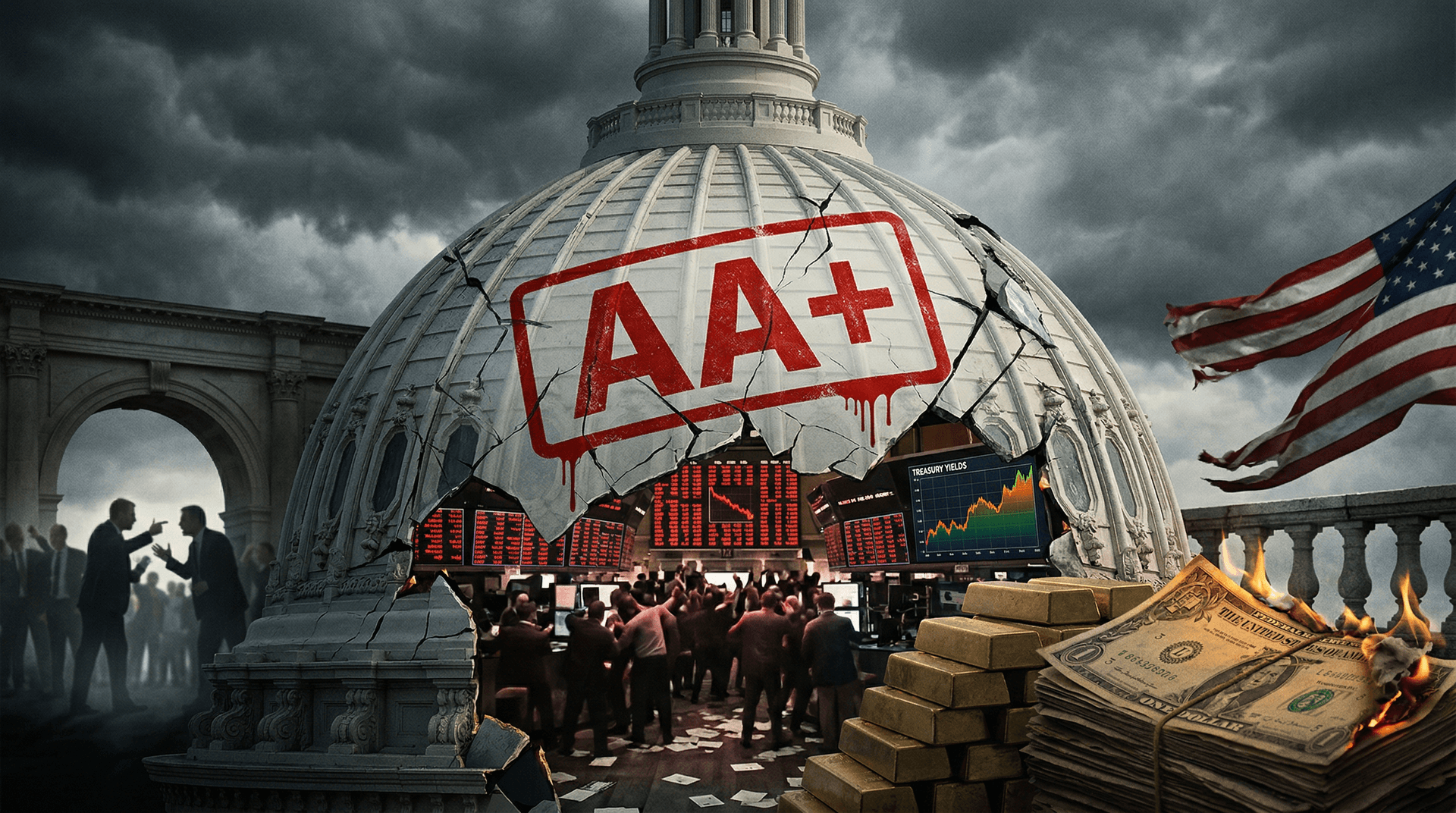
In a seismic shift for global markets, Fitch Ratings announced on August 1, 2023, that it was downgrading the United States' long-term foreign and domestic currency issuer default ratings from the pristine 'AAA' to 'AA+'. This marks only the second time in modern history that a major rating agency has stripped the world's largest economy of its top-tier status, following S&P's similar move in 2011. The decision underscores growing concerns over America's ballooning debt, political polarization, and what Fitch describes as an "erosion of governance."
As a senior tech journalist covering the intersections of finance and innovation, this event reverberates far beyond Wall Street. Tech giants like Apple, Microsoft, and Nvidia—whose fortunes are tied to economic stability—face potential headwinds from higher borrowing costs and investor jitters. With US Treasury yields already climbing amid inflation fears, the downgrade could amplify volatility in tech-heavy indices like the Nasdaq.
The Anatomy of the Downgrade
Fitch's 11-page report laid bare a litany of issues plaguing US fiscal policy. At the forefront: the repeated debt-ceiling standoffs that have pushed the government to the brink of default twice in recent years—most dramatically in 2021 and again in 2023's May-June crisis. "The repeated debt-limit political standoffs and last-minute resolutions have eroded confidence in fiscal management," Fitch stated, adding that governance has deteriorated to a 'aaad' level on its scale.
Key factors cited include:
- Projected debt trajectory: Gross government debt is expected to rise to 119% of GDP by 2025, up from 113% in 2022.
- Fiscal deficits: Persistent deficits averaging 5.8% of GDP over the last three years, far exceeding those of peer AAA-rated sovereigns.
- Political dysfunction: The inability of Congress to enact medium-term fiscal reforms amid partisan gridlock.
Notably, Moody's and S&P maintain their ratings at Aa1 (equivalent to AA+) and AA+, respectively, but Fitch's move signals a broader reassessment. The agency emphasized that while the US economy remains robust—with 2.5% GDP growth forecasted for 2023—the political risks are now systemic.
Immediate Market Reactions
Markets didn't panic as they did post-S&P's 2011 downgrade, when stocks plunged 6%. On August 1, the Dow Jones fell 1.2% (about 500 points), the S&P 500 dipped 1.3%, and the Nasdaq shed 1.6%. Treasury yields spiked briefly, with the 10-year note hitting 4.1% before settling around 4%. Gold and the dollar strengthened as safe-haven bets.
By August 19, however, sentiment had stabilized. Strong July CPI data on August 10—showing core inflation at 4.8%, cooler than expected—propelled a tech-led rally. Nvidia surged on AI hype, up 5% that week, while the S&P 500 notched gains. Yet, the downgrade lingers like a shadow; 30-year Treasury yields hovered near 4.3%, signaling higher mortgage and corporate borrowing costs.
Tech stocks, sensitive to interest rates, showed resilience but vulnerability. Higher yields discount future earnings more harshly for growth names. Apple, sitting on $170 billion in cash, is somewhat insulated, but smaller SaaS firms face refinancing squeezes.
Historical Context and Precedents
The US had held AAA ratings from all three major agencies (Fitch, Moody's, S&P) since 1975. S&P's 2011 cut came amid the debt-ceiling fiasco and European debt crisis, costing trillions in market cap short-term but proving prescient as deficits exploded post-COVID.
Fitch's action echoes that era but arrives in a hotter inflationary environment. Post-2011, borrowing costs rose modestly; AAA Treasuries still underpin global finance as the "risk-free" benchmark. A full consensus downgrade to AA+ could upend that, raising costs for everything from student loans to mega-cap tech debt issuances.
President Biden dismissed the report as a "political" ploy, pointing to the US's "gold-standard" economy. Treasury Secretary Janet Yellen called it "arbitrary and baseless," arguing legislative successes like the Inflation Reduction Act demonstrate fiscal discipline. Critics, including Republican leaders, counter that Biden's spending spree—$6 trillion in new deficits since 2021—fuels the fire.
Implications for Business and Tech
For Corporate America, the stakes are high. US firms hold $25 trillion in Treasuries; a rating cut erodes collateral value, potentially triggering margin calls or regulatory headaches. Tech, with its $2 trillion+ market cap leaders, relies on cheap capital for R&D and buybacks. Goldman Sachs estimates a full three-agency downgrade could add 20-30 basis points to 10-year yields, translating to $100 billion+ in annual interest for the federal budget—crowding out innovation grants.
Tech Sector Spotlight:
- Semiconductors: Firms like Intel and TSMC, with global supply chains, watch dollar strength warily. A weaker US fiscal outlook could stoke trade tensions.
- Cloud Giants: AWS, Azure, and Google Cloud thrive on capex; higher rates crimp valuations.
- Startups: Venture funding, already cooling, faces headwinds as LPs (limited partners) demand safer bets.
Economists like Mark Zandi of Moody's Analytics warn of a "slow-burn" effect: gradual yield creep eroding consumer spending, key for ad-driven tech like Meta and Alphabet.
Global Ripples
The downgrade reverberates worldwide. China and Japan, holding $1.1 trillion and $1 trillion in US debt respectively, face portfolio hits. Emerging markets, long reliant on US stability, brace for capital outflows. The eurozone, still healing from energy shocks, eyes US turmoil warily.
In tech terms, it bolsters calls for supply chain diversification. Companies accelerating 'friendshoring'—from Taiwan to Arizona for chips—gain urgency.
Path Forward: Reform or Reckoning?
Fitch stopped short of further cuts but placed all ratings on 'Rating Watch Negative,' hinting at more pain absent reforms. Bipartisan fiscal commission? Entitlement cuts? Tax hikes? Political realities dim prospects before 2024 elections.
For investors, diversification reigns: more TIPS, gold, or even corporate bonds. Tech remains a bright spot—AI investments show no signs of abating—but volatility looms.
This downgrade isn't Armageddon; the US dollar's reserve status endures. Yet it spotlights a stark truth: even superpowers can't borrow infinitely without consequence. As markets digest August's twists—from wildfires to rate bets—America's credit card bill demands attention. Tech innovators, keep building; policymakers, start balancing.
Word count: 912