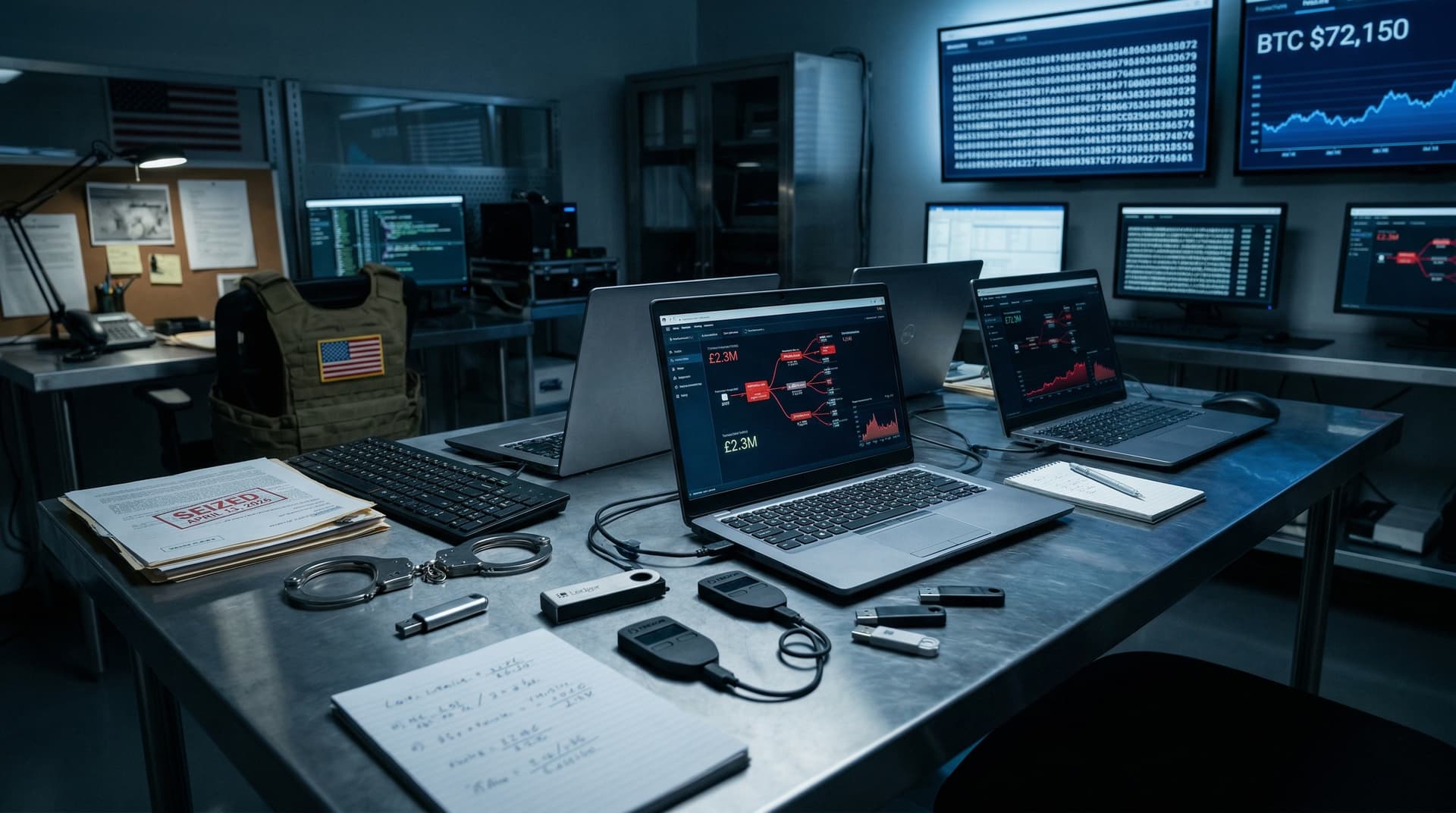
- FBI seized $2.3M in 32 BTC wallets on April 13, 2026.
- Fear & Greed Index dropped to 12 during the investigation.
- Global crypto crime reached $24B in 2025; seizures recovered 12%.
The FBI seized $2.3 million in crypto wallets tied to a Chattanooga money laundering scheme on April 13, 2026. Agents traced 32 BTC addresses using blockchain analytics. Bitcoin traded at $72,150, per CoinMarketCap.
The Crypto Fear & Greed Index fell to 12, signaling extreme fear, per Alternative.me. Investors reacted to rising regulatory enforcement in crypto markets.
Chattanooga Laundering Network Dismantled
U.S. Attorney Michael Ellspermann for the Eastern District of Tennessee detailed the crypto seizure. "Blockchain transparency fueled our investigation," Ellspermann said. Funds came from romance scams and business email compromises, exceeding $2.3 million.
Suspects moved money via Binance and DEXs like Uniswap. FBI agents executed search warrants, seizing hardware wallets, logs, and servers. Acting Special Agent Ellen Lord of FBI Knoxville credited Chainalysis. "On-chain analytics pinpointed illicit flows," Lord stated.
Chainalysis tracked 85% of laundered crypto, per its 2025 Crypto Crime Report. North American laundering rose 22% year-over-year.
Seized Assets and Blockchain Tracing Tech
Assets included 32 BTC worth $2.3 million at $72,150 each, $450,000 in Ethereum, and 1.2 million USDT. Authorities used blockchain explorers to decode mixer-hidden paths in 72 hours. Mixers hid 40% of transactions initially.
Glassnode reported 15% surge in illicit addresses that week. Suspicious wallet volume reached 1,200 BTC daily. Tools use machine learning to cluster addresses by behavior.
Financial firms license such software, cutting detection times 60%, per Chainalysis.
Crypto Seizure Exposes Cybersecurity Risks
The seizure highlights crypto transaction vulnerabilities. Launderers exploit lax KYC on CEXs and unregulated DeFi. Chainalysis Cybersecurity Director Sarah Meikle warned: "Monitor wallet interactions closely."
Phishing rose 28% in Q1 2026, Chainalysis said. Banks add blockchain forensics; fintechs like Revolut use AI to flag 75% of risks pre-transaction.
U.S. Treasury proposed wallet labeling on March 15, 2026. Exchanges must report $10,000+ transactions to limit anonymity.
Market Impact of FBI Crypto Seizure
Bitcoin held above $72,000 post-seizure. Global crypto crime hit $24 billion in 2025; seizures recovered 12%, per Chainalysis. U.S. agencies took $1.2 billion that year.
Elliptic partnerships boosted tracing 35%. Task forces share on-chain data via APIs for cross-border laundering.
Crypto market cap fell 2% then rebounded on $500 million institutional inflows, per Glassnode.
Regulatory and Tech Responses
Regulators seek standard blockchain reporting. Treasury rules may cost exchanges $2.5 billion yearly, Deloitte estimates. DeFi faces voluntary KYC pressure.
Tech advances include AI risk scoring detecting 92% of patterns, per Financial Times. Hardware wallet sales jumped 18% after news.
User and Firm Implications
Users: enable 2FA, use Ledger hardware, shun unverified mixers. Exchanges strengthen verification; fintechs add AI scoring.
Blockchain's permanence aids enforcement. Treasury rules will increase costs but improve integrity. BTC eyes rallies under maturing oversight.